Poor accuracy
In most cases the hardware is not at fault. The cause is one of three: the differential source, sky obstruction, or the coordinate system.
Most field problems in high-precision positioning are not failed hardware; they trace back to one of three things: the differential source, the environment, or the settings. This page answers the questions we receive most often, with the source specifications of the H13, H11 and MG20 for reference.
In most cases the hardware is not at fault. The cause is one of three: the differential source, sky obstruction, or the coordinate system.
When the coordinate system and the geoid model are not consistent, the exported results are shifted as a whole.
Unstable power, network or mount point all present as positioning being unavailable.
Multi-constellation centimetre-level RTK; NTRIP CORS differential; fixed-solution convergence <10s.
Constellations: BeiDou-3 + GPS + GLONASS + Galileo + QZSS + SBAS; update rate 1–20Hz (10Hz default).
Communication: full-network 4G + Bluetooth 5.1; ISP high-definition display with voice prompts.
Enclosure: IP67, 2m drop resistance, 4000mAh, RTK runtime ≥20h; USB-C 5V/2A.
Three versions: BeiDou-only, dual-frequency and Pro; channels 128 / 128 / 1408 (the Pro shares a module with the H13, NebulasIV).
RTK accuracy: horizontal 1cm+1ppm / 1cm+1ppm / 0.8cm+1ppm; vertical 2cm+1ppm / 2cm+1ppm / 1.5cm+1ppm.
Update rate 1–10Hz / 1–10Hz / 1–20Hz; the Pro version supports more BeiDou/GPS/GLONASS/Galileo/QZSS/NavIC/SBAS frequencies.
Full-network 4G CAT1 + NTRIP + MQTT + dual-mode Bluetooth; OLED display, IP67; USB-C, 5V/2A adapter; configured with GboxTools.
UM980 + 4G + Bluetooth; 1408 channels (NebulasIV); supply range 5–30V.
Frequencies: BeiDou B1I/B2I/B3I/B1C/B2a/B2b, GPS L1/L2/L5, GLONASS L1/L2, Galileo E1/E5a/E5b/E6, QZSS L1/L2/L5/L6.
RTK accuracy (RMS): horizontal 0.8cm+1ppm, vertical 1.5cm+1ppm; cold start <20s.
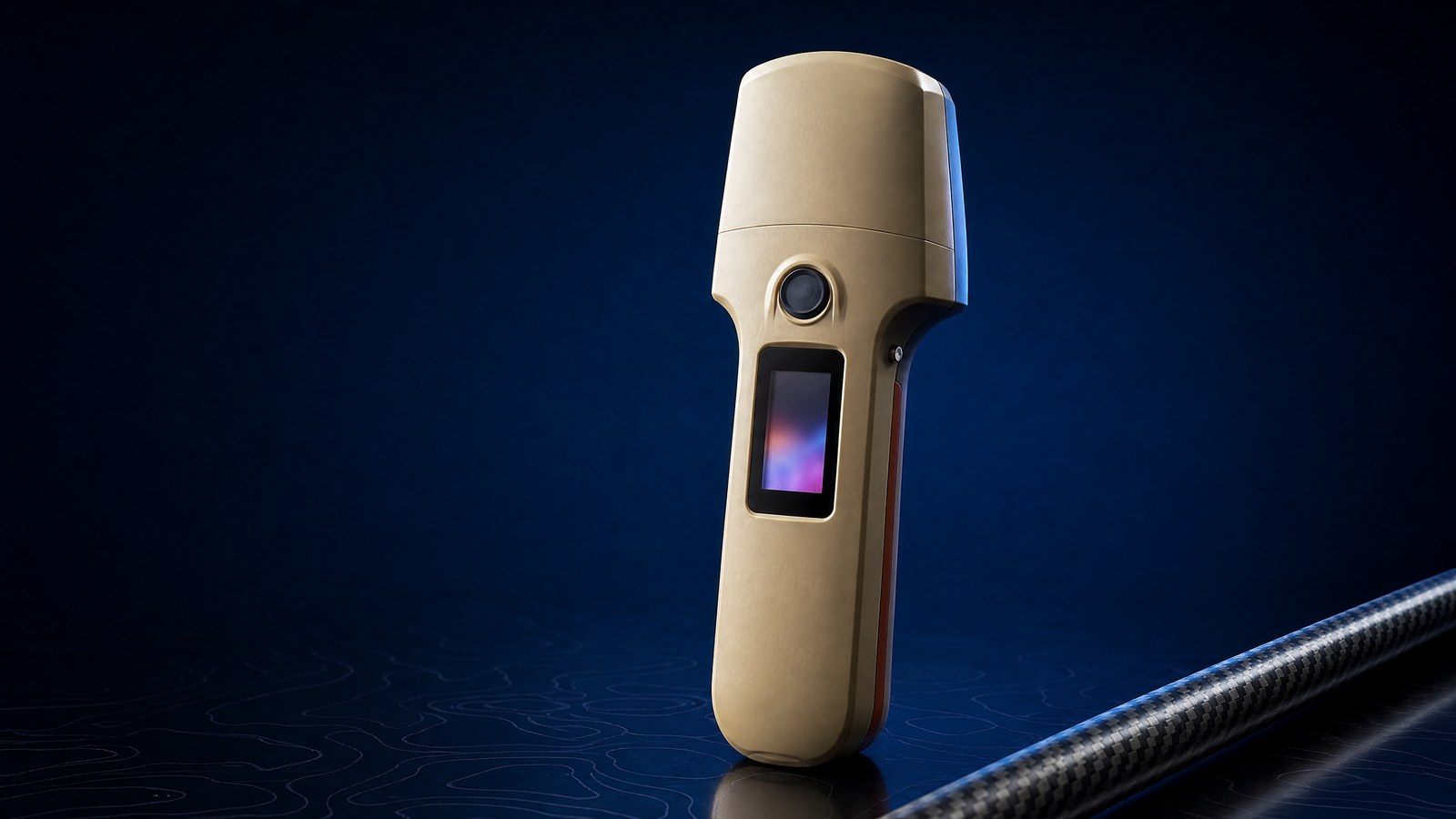
Current products (verified 2026-09-29): handheld H13 (multi-constellation, multi-frequency professional RTK handheld, single Pro tier) / H11 (BeiDou-only, dual-frequency and Pro versions; H11 ProEU for Europe and H11 ProEN for North America overseas; brand name "Beidou Xingtan") / module MG20 (customizable RTK PCBA) / antennas SK6640 and SK6608. The H11 Pro and H13 use the same module (1408 channels, NebulasIV).
Whether the account is valid, whether the mount point is correct, and whether the network is stable.
Obstruction, multipath, pole height and coordinate system settings.
Whether power, antenna and interface connections are reliable.